

Disabled man wants to keep living independently; Medicaid cuts could take that away
H.R. 1 contains more than $900 billion in projected federal Medicaid spending reductions over ten years. Behind every dollar are people. Some, like me, will be wondering whether there will be enough support available to remain in our homes.


By Carl Schulze
I live in Fox Crossing. I use a power wheelchair. And I have a pretty simple goal: I want to keep living in my own home.
That shouldn’t be controversial.
But for people like me, living independently isn’t something we can take for granted. I need help with some of the basic things most people never have to think twice about. Getting out of bed, getting dressed, preparing meals and taking care of the things that allow me to live my life.
For me, that help comes through home and community-based services, or HCBS.
Those four letters might not mean much to most people. To me, they mean home. Without those services, I don’t suddenly become less disabled. I don’t suddenly need more medical care. I simply lose the support that allows me to live in my own community. And when that support disappears, the alternatives can become very limited.
That is why I am paying close attention to what is happening in Washington.
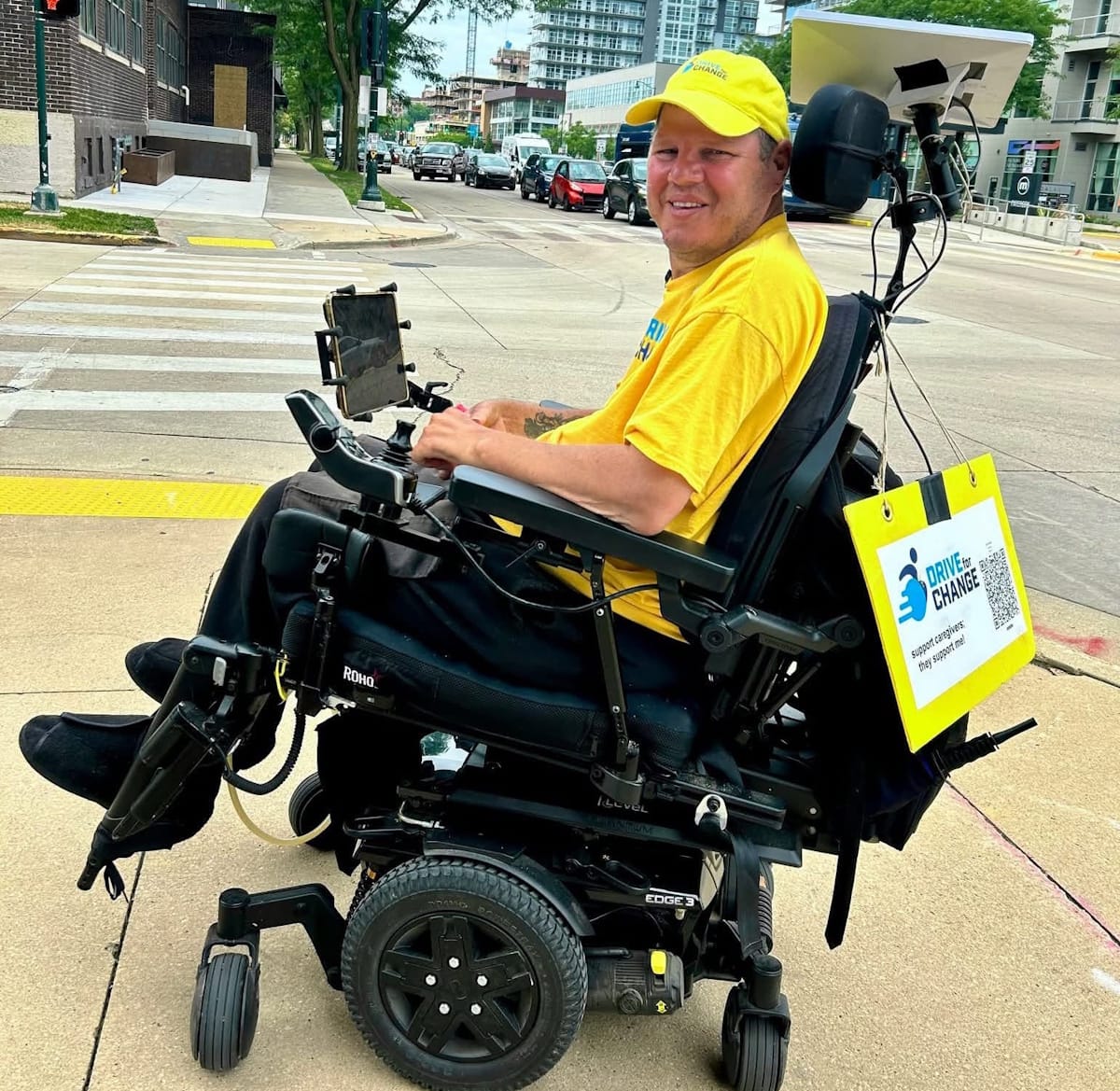
Last year, I made my second annual Drive for Change. I got into my power wheelchair and traveled more than 100 miles from Fox Crossing to the Wisconsin State Capitol to raise awareness about the shortage of home health care workers and the importance of paying them enough to keep doing this work.
I wasn’t doing it for publicity. I was doing it because I know what is at stake.
Now we are seeing federal decisions that could make that fight even harder.
H.R. 1 contains more than $900 billion in projected federal Medicaid spending reductions over ten years. Those numbers are almost impossible to comprehend. But behind every billion dollars are people. Some of those people are going to be worried about whether they can afford their medications. Some will worry about losing coverage. And some, like me, will be wondering whether there will be enough support available to remain in our homes.
Then came June 18.
The Department of Justice’s Office of Legal Counsel issued an opinion arguing that the Americans with Disabilities Act and Section 504 of the Rehabilitation Act do not require states to provide services to people with disabilities in the most integrated setting appropriate to their needs. The opinion also takes a much narrower view of the Supreme Court’s 1999 Olmstead decision.
For more than two decades, Olmstead has been understood as an important protection against unnecessary institutionalization. The basic idea is not complicated: if a person with a disability can live in the community with appropriate supports, that person shouldn’t be forced into an institution simply because providing those supports is difficult.
The DOJ’s new position puts that understanding under serious pressure.
And this isn’t just a theoretical legal debate anymore. In Texas v. Kennedy, Texas, Florida and Alaska, along with the federal government, have asked a federal court to remove the community-integration provisions from the 2024 Section 504 regulations.
I keep coming back to one question: What happens to people like me if the system that makes independent living possible is weakened?
I don’t think the answer should be, “You’ll have to figure it out.”
As a county board supervisor, I see another side of this issue. Local governments are the ones that eventually have to deal with the consequences when people lose the support they need to remain in their homes. Families get stretched thinner. Caregivers become harder to find. County systems face greater pressure. And people who were living independently can suddenly find themselves with nowhere else to go.
That isn’t just a Washington problem.
It has become a Wisconsin problem. It has become a Winnebago County problem. And most importantly, it has become a human problem.
I don’t expect the federal government to solve every problem in Medicaid. I understand that Medicaid costs money. I understand that government programs need accountability. I understand that taxpayers deserve to know where their money is going.
But there is a difference between eliminating waste and eliminating the supports that allow people with disabilities to live independently. There is also a difference between saving money on paper and simply moving the cost somewhere else.
If a person can remain in their own apartment with the help of a few hours of care each day, that is not a failure of the system. It is the system working.
I don’t want to live in an institution. I want to wake up in my own home. I want to decide what I’m doing that day. I want to go to a county board meeting. I want to advocate for other people with disabilities. I want to be part of my community.
I want the same basic opportunity that most people assume they will always have, the ability to live where I choose and participate in the community around me.
That shouldn’t depend on whether there happens to be a caregiver available to help me get out of bed.
It shouldn’t depend on whether Washington decides that community-based services are worth protecting.
And it shouldn’t depend on whether being disabled means the government gets to decide where I belong.
I became a county board supervisor because I believe local government works best when it remembers the people behind the policies and the numbers.
I am one of those people.
So I will continue speaking up, not because I have an interest in creating another political fight, but because I have a home to protect. And so do millions of other Americans with disabilities. We should be making it easier for people to live independently, not harder.
For me, HCBS isn’t a policy preference. It’s what makes my home my home.
Carl Schulze is a Winnebago County Board Supervisor


