


Immigrant trying to keep 'hope and optimism' amid Trump's chaotic policies
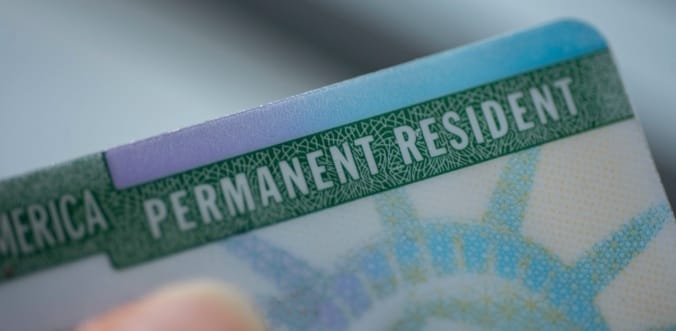
Lucy has a master's degree and an American-born husband, but her life is on hold after Trump's proclamation denying green card interviews for people from certain countries

She occasionally wonders if she could have done something differently.
She asks herself, for instance, if she and her husband might have pushed a little harder for certain paperwork that didn’t arrive right on time.
But she knows that’s the road to madness. Plus, she says, some seven months after her green card interview was cancelled following Donald Trump’s innocuous sounding but profoundly impactful ‘Presidential Proclamation 10988,’ she realizes there was not much else she could have done. And that’s even if she had known in advance Trump was putting an indefinite halt to such interviews for people from any of 39 designated countries, including Lucy’s own.
“I think I've been trying not to think about it because you don't know what you don't know,” says Lucy, who hails from one of the 26 African nations Trump has designated as a “public safety” concern. “But for a while, I felt frustrated because the last thing we waited for was letters from people we knew who were confirming that (her marriage to an American) was real.
“And I sometimes wonder if we should have added a little bit more pressure,” she continues. “But also, we understood people were doing something to help us, right? So I feel like you want to be accommodating of everyone's schedule.”
The proclamation came out on December 16, just days ahead of Lucy’s scheduled green card interview. Her life has been on hold ever since.
Bittersweet graduation
It was high school exchange program in 2017 that brought Lucy (not her real name) to the United States from an African country she chooses not to identify for this article. After returning home to finish high school she came back to the U.S. on an F-1 visa for full-time students. She began her studies at a Midwest community college before she transferred to a university in the northeast.
There, she met and ultimately married her husband, who grew up in the Fox Valley.
Lucy’s interest was public health, specifically the science of aging and its diseases. After she graduated, she got a job with the university in their health and technology center, where she worked with Parkinson’s patients.
“What we were trying to understand is if we can do virtual decentralized studies to make sure we can monitor Parkinson’s virtually because as you progress, it gets more difficult to come in for those visits or be part of studies,” she says. “So that led me to my master's because I enjoyed working with people who were experiencing the disease because my grandfather had it too.”
As she closed in on her Master’s in a STEM field at a Washington, D.C. university, Trump’s proclamation came down. In May of this year, Lucy graduated with her Master’s, a bittersweet accomplishment. She was glad to get her degree but she found herself in employment limbo as an empty summer loomed.
“From May to the end of June, I was feeling that sense of resentment and sadness because I remember a professor of mine before the summer started asking what people were doing for the summer, and I remember just feeling upset that I didn't have anything concrete to say because I didn't know how the summer was going to go because the pause was still in place,” she says.
Adding to the sadness was that, because of the travel restrictions, Lucy’s parents couldn’t attend her graduation, though Sue, her mother-in-law, did.
Trump’s proclamation, critically, also paused work permits, meaning Lucy couldn’t accept the jobs in her field that were offered to her.
Confusing policies
Lucy didn’t know much about American politics when she came to the United States in 2019 during Trump’s third year in office. She says that coming from a developing nation, a developed one just seemed so much more stable and democratic. While she initially hadn’t considered making a life in the U.S, she fell in love with Brian (not his real name) and began to think in terms of a career.
Her apprehensions began at the beginning of Trump’s second term.
“I started wondering about the future of just being here and existing, and sometimes feeling like an outsider, while also acknowledging there are economic limitations at home,” she says. “Do I want to live like that for a few more years? You just wonder, do you want to feel like that your whole life in another country?”
Part of Lucy’s frustration stems from trying and failing to make sense of immigration policy over the past year-and-a-half, most of which is the result of legally dubious executive orders that are often endlessly litigated in the courts. She understands that a country must protect its borders, she says. But the countries that were selected for the proclamation seemed to have less to do with safety and more to do with ethnicity. All were from Africa, the Middle East and Southeast Asia.
“I just felt like the whole thing makes no sense,” she says. “I guess you're not sure if it's actually sincere what they're saying in terms of national security and trying to scrutinize applications and make sure that the U.S. is safe because it just doesn't line up with what they report in terms of fraud, or it doesn't actually address the issue that is currently present.
“We all want a system that works and that people are honest. But I think for them to be making everything just take longer just doesn't feel right.”
Her mother-in-law Sue says it all is stressful for her, as well.
“I try not to spend much time thinking about what could go wrong if the crackdown on legal immigration paths continues, but those thoughts creep into my mind at times,” she says. “And it is deeply unsettling. Lucy is our daughter and we feel powerless to help.”
Sue recalls their small wedding and says she looks forward to the bigger wedding that is planned for when school is done and the restrictions are lifted. She says she instantly liked Lucy and got to know her better during her first Christmas visit.
“I loved seeing how she and Brian interacted with and supported each other,” Sue says. “And I can’t wait to meet (Lucy’s) mom and celebrate the marriage in person.”
She says she and Lucy’s mom message each other and share pictures on a regular basis.
Putting her expertise to good use
Part of her frustration comes from what she sees as some Americans’ misunderstanding of immigration and immigrants. What Lucy has to offer in the field of aging – in a country with a rapidly aging population – could help not just her, she says, but the U.S and the world. Her master's program is in an interdisciplinary field that uses computer science, mathematics, statistics, and information technology to analyze and interpret massive amounts of biological data. It requires expertise few people possess.
“It would be good for me to continue on building my career," she says. "But employers aren’t holding jobs for you while you wait.
“I think people say immigrants feel like they're entitled to certain things, but I think just looking for opportunities to work in research that's beneficial not only to the U.S. but globally is not something that I think is selfish. I think we just want to put in use those skills that we gained from school here to do good.”
Economically, the Cato Institute estimates that immigrants – both documented and undocumented – added $14.5 trillion in fiscal surplus over the past three decades. The non-partisan Congressional Budget Office further estimates immigration will add $1.2 trillion in federal revenue over the next 10 years.
A solid marriage helps
And then some of her frustration comes simply from not being able to contribute to her family’s long-term financial goals. With her husband still in school pending his decision on his future career options, Lucy’s inability to work puts additional strain on their finances and their marriage. She says they can probably make it until the end of the year on her husband’s stipend.
Then, too, is the limbo the proclamation has put on her husband’s choice of career locations. He wants to wait until her situation is settled before he makes his decision. She tells him there are too many variables and the focus should be first on his career.
As a person who grew up with a strong mother who encouraged her children (Lucy has a sibling living in the United States) to make their own way in the world and to be self-sufficient, she is especially plagued by her inability to provide.
It has led, she admits, to bouts of depression to the point that she has sought therapy. She says when her husband works from home, she feels better just from “the energy and the presence of someone else.” It points to the solidarity of their marriage, even through such trying, uncertain times. He is, she says, always reassuring her, especially about her feelings of responsibility for their situation.
“I think because we have experienced a long-distance relationship before, we've always had a good bond in terms of managing high-stress situations,” she says. “I think that probably molded our relationship in a way that we can communicate and talk about things. I think it's helped that he is open to talking about it, or if I just sometimes just want to tell him that it feels very discouraging that this is happening. So I think the way that we've managed to keep talking about things has really helped.
“I will say I think a few months ago I did feel bad about the entire situation where I felt like if he had married someone who was a citizen, he wouldn't even have to think about any of these things.”
‘I live with the consequences’
Lucy says she wishes more people better understood the reality of immigrant lives. It would help, she suggests, if stories were told not just from the standpoint of immigrants themselves but from the mouths and points of view of citizens who marry them.
“I listened to an immigration show where some of them talked about, how she was ‘counting on my immigrant husband to work for their medical bills,’ or ‘he takes care of me,’ or ‘he takes care of the kids,’ or ‘it would be a strain on our marriage or our children's upbringing if he weren’t there,’” she says. “And I think people maybe would appreciate hearing from citizens who are affected because I think U.S. citizen stories will be taken seriously, at least their advocacy.”
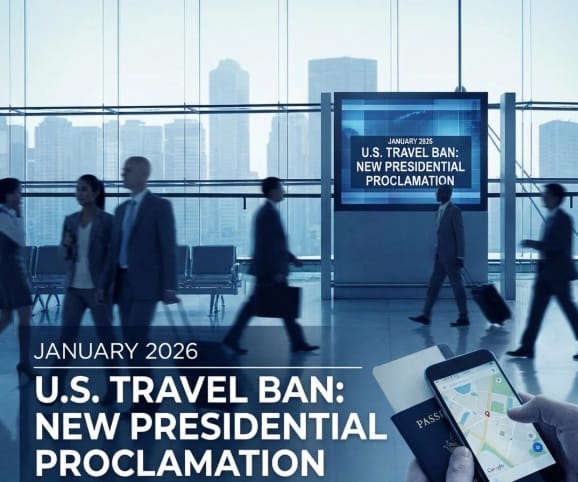
The highest price Lucy has paid is not being able to see her family for many years. It is always risky to travel out of the country with an F-1 visa, even during the much more relaxed environment of the Biden administration. Any lapse in paperwork can block their return. Beginning with the second Trump term and the greater strictures on coming into the United States from an African country, she was strongly advised against leaving. Then came the definitive travel ban that took effect at the beginning of the year.
“The inability to see my family or have them travel for special occasions has weighed heavy on me at times,” Lucy says. “It is something I became numb to but also does give me guilt especially when you have family members who are aging or facing illness. I have had to remember how brave it was to study abroad but I also live with the consequences.”
Federal judge lifts Trump’s proclamation but it’s already being appealed
Hope has come in the form of a federal judge’s injunction issued last month against Trump’s Presidential Proclamation 10988, which effectively – though not definitively – removed all barriers to asylum decisions, work permits, benefits and travel for people from the designated 39 countries. But it is just hope.
The Trump administration has already requested a stay on the decision and is likely to slow-walk its appeals, starting with appellate courts and almost certainly ending with the Supreme Court, where, as Lucy points out, nothing is certain.
“People keep saying that there's no way that the Supreme Court will agree with this, but I think it's rational to have concerns,” she says. “You don't really know if this will be implemented back. But yeah, so I think I am optimistic, but I'm not too. You try not to get too excited. You just kind of are waiting every day.”
Even with a good ruling, the backlog that the original proclamation has created over the past seven months is certain to slow down everyone’s cases, including Lucy’s. She estimates she is likely five to seven years from a green card, even without the current logjam.
“Maybe it'll be next week,” she says. “Maybe it's today. Maybe it's five months from now. So that's sort of my situation. I have a job offer I was supposed to start in May, and they haven't taken it away, but I'm sure they're wondering when I'll be able to start.”
‘Hope and optimism’
Lucy says that despite it all, despite the delays and being made at times to feel unwelcome, despite the uncertainty and the liminal state she currently occupies, even despite missing her family, she has few regrets about coming to the United States as a first-generation student.
“I'm really happy with my master’s degree and everything that I've learned,” she says. “A lot of what I have in terms of even just the home that we have now and the family that I'm married into. I love my husband and just the relationship that we have. That my sibling I know is very happy, and my family also loves his family.
“I think I'm just trying to find that sort of hope and optimism for what the future looks like because of everything that we're currently experiencing. I listened to Robert Reich’s podcast, and he talks a lot about just how people have to continue the fight or continue to be advocates, especially for vulnerable communities. I think that does make me optimistic. I think I just feel like it might be a long time till we, not just immigrants, but people who are currently unhappy in the U.S., see the relief that they're hoping for. I think it's hard to know what the future looks like.”
Immigrant trying to keep 'hope and optimism' amid Trump's chaotic policies © 2026 by Kelly Fenton is licensed under CC BY-NC-ND 4.0


