


'The Land of Everlasting Sky' calls us to account for our past sins if we are to move forward
Appleton writer Dr. Jill Swenson explores disturbing history of colonialism in Minnesota while uncovering her own family history

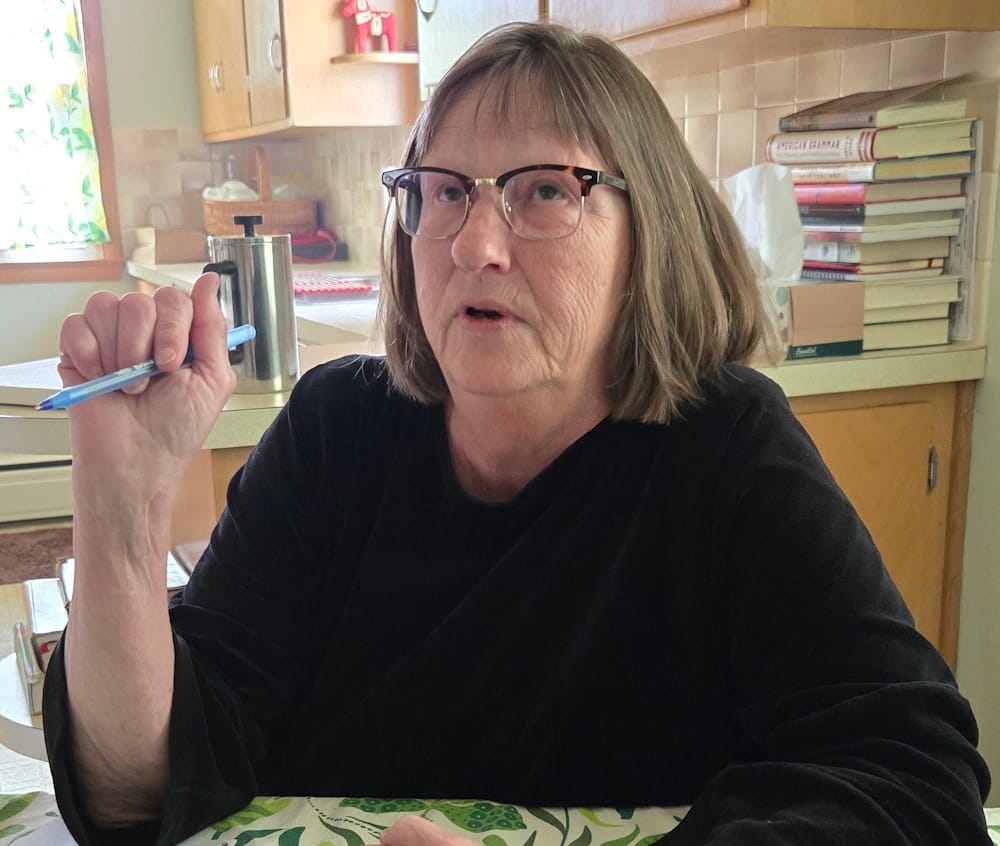
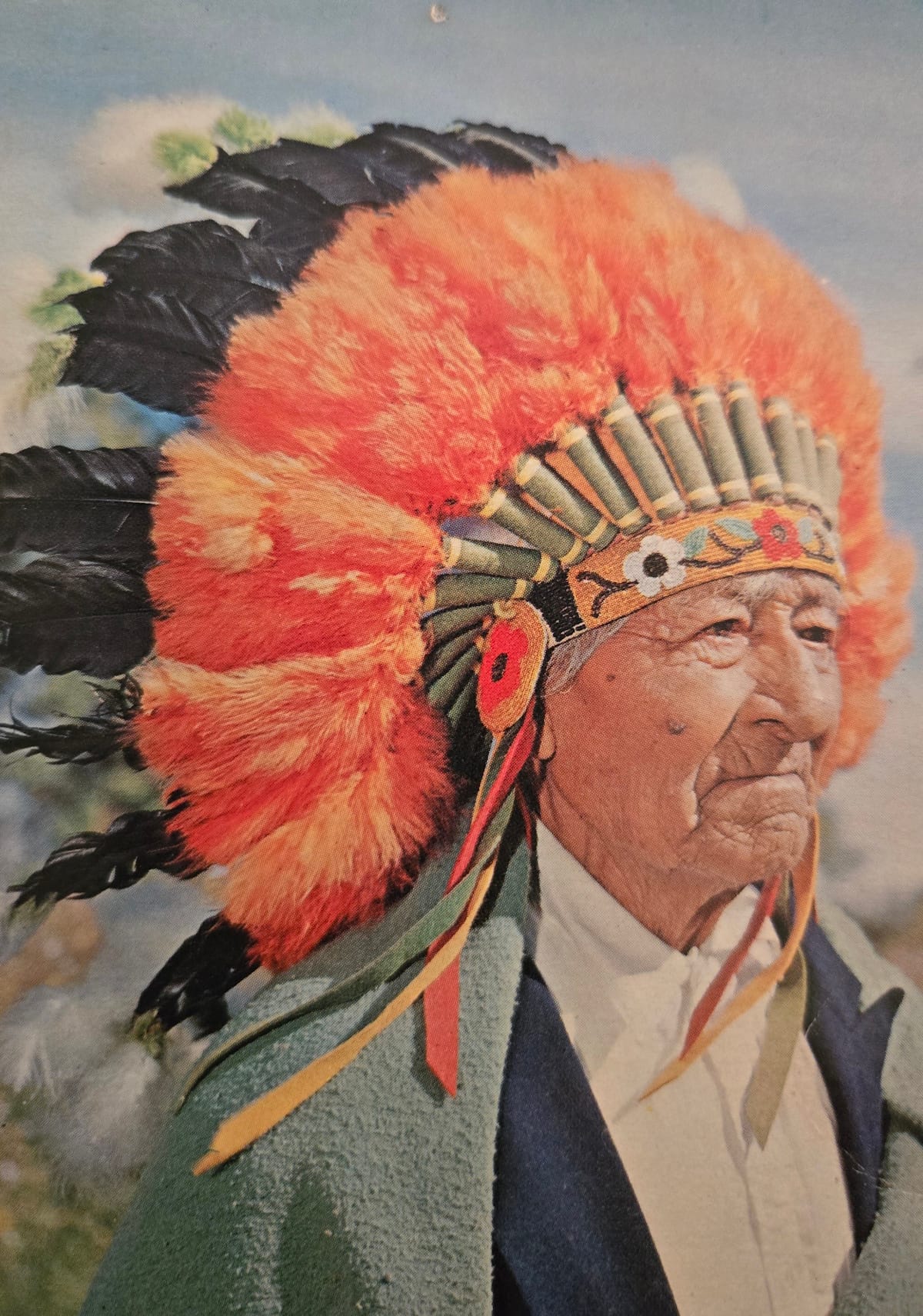
When Jill Swenson was ten years old her family took her on vacation to Warroad Minnesota where she met an elderly Ojibwe man in a wheelchair in the nursing home. She noticed he had, she writes, “deep leathery wrinkles in his tan skin.”
From the distance of more than half a century, Swenson remembers being drawn toward the man. She remembers him cupping her ears and speaking to her slowly in Ojibwe. She remembers placing her hands on his gnarled knuckles as he spoke.
I didn’t understand a word, but felt his spirit enter me. His hands were warm and soft, and the heat flushed my head, neck, and shoulders, and moved down to my gut where I felt both his urgency and his sorrow.
Swenson went on to graduate from Appleton East, get a degree from Lawrence University, and both her master's degree and PhD from the University of Chicago. She later taught at the University of Georgia and Ithaca College. While in New York, she and her partner, Sam Warren, lived off the grid for years.
There was nothing along the arc of that life to suggest that the old man in the wheelchair would become the focus of her life over the course of a decade nearly sixty years later, nor that she would become embedded in the story of his ancestors.
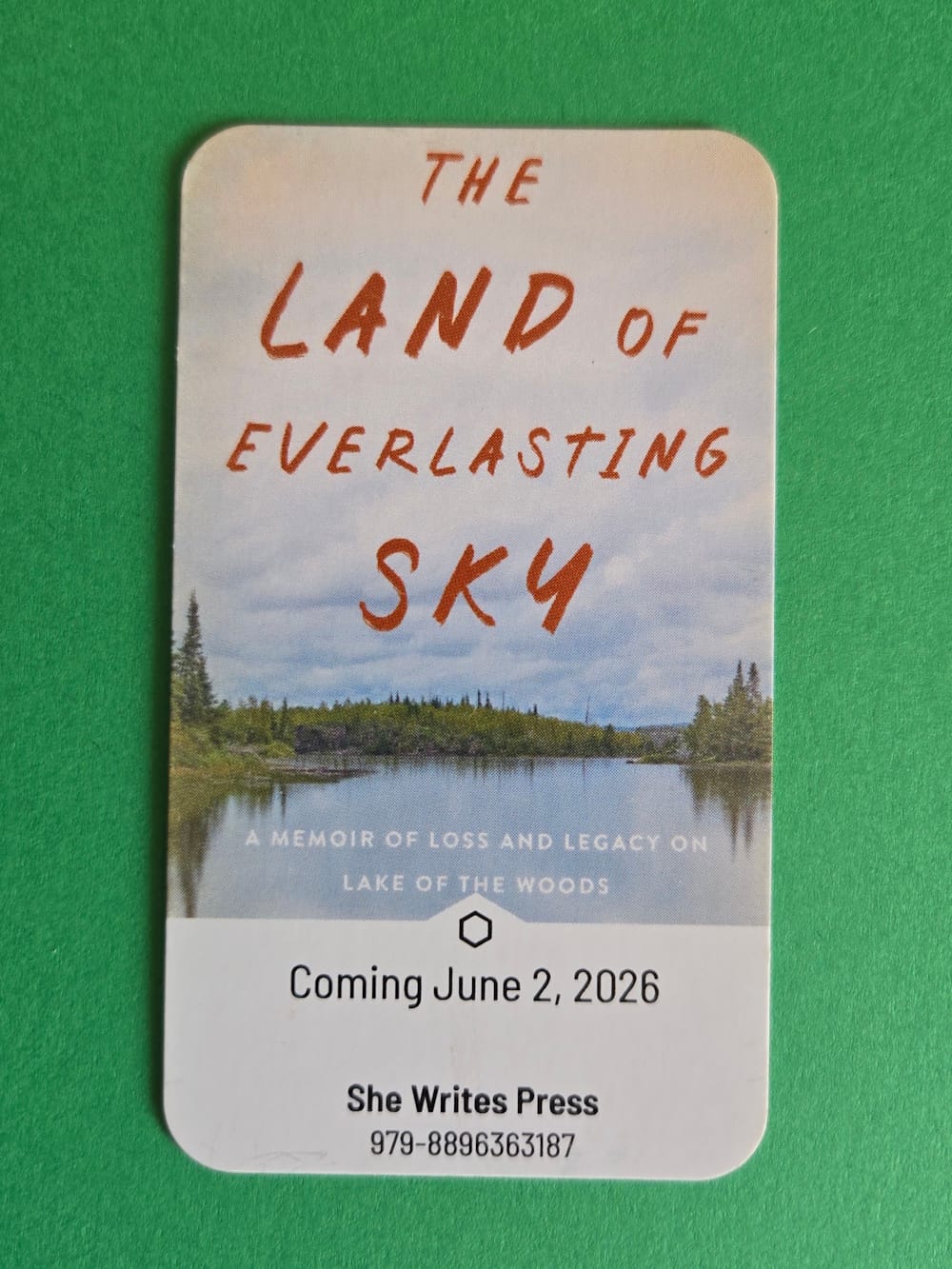
That man was Kakaygeesick, a member of the Ojibwe tribe and a Grand Midewin, or Spiritual Leader. He was, by accounts that have been verified, 124 years old when he died shortly after Swenson’s encounter with him in 1968. The name translates to Everlasting Sky and it is the name of Dr. Swenson’s first book, The Land of the Everlasting Sky: A memoir of loss and legacy on the Lake of the Woods.
In the book, the Appleton writer and editor tackles generational issues, not just her own family’s and the Kakaygeesicks, but of American colonialism, collective trauma, our relationship to the land, white privilege, white saviorism, land rights, cultural appropriation, the fluid and arbitrary nature of boundaries, having a sense of belonging – or not belonging – and the importance of reckoning with our past, both the good and the bad.
“We all want to know more about who our ancestors were and where we came from,” Swenson says. “I think that's probably the most popular hobby in America — genealogy and finding your roots. And yet most people go only looking for trees. They don't want to see forests.
“Trauma has never been processed by our ancestors, especially in this country, of white folks, mostly who were immigrants, who often suffered traumas before they came to this country, seeking refuge from them. And so I see a pattern, not just with myself, but with generations of Americans, which is trying to put the past behind us, forget what happened. Let's move forward. But we can't until we deal with what really happened.”
'Unobstruction' is a privilege
As Swenson excavates her family history and that of the Kakaygeesicks and the Indigenous tribes of Minnesota, she is able to discern parallels between her own experiences and that of Native people, though the divide between those parallels is a virtual cultural chasm. She discovers things about her own perspectives that she was previously blind to — what she calls the “unobstruction” that white people take for granted and for the sense of victimhood they feel whenever they do face obstacles.
She laughs when she tells the story of losing her keys on a hot day when she lived in New York. She remembers feeling like a victim, like why is this happening to me? She became even angrier when her husband told her over the phone that she was simply going to have to find her keys to resolve the situation.
“Now he's victimizing me, right?” she says. “He hung up on me, and I was really pissed, because he was right. There was no way to start the vehicle without the keys. And yet, in that moment, I felt entirely like a victim, as though somebody could save me. That kind of thinking has disappeared. That it's no longer about, somebody save me, or I can come in and save somebody else, right? It's much more focused on what's the problem? Can we find a practical solution, can we work through this in some way, rather than the hysterics?”
She distinguishes her own sense of victimhood and privilege from the Anishinaabe term “survivance,” coined by Anishinaabe scholar Gerald Vizenor, to describe Indigenous survival through resistance.
“He talks about what the experience is like for people who have a colonized history,” she explains. “Which is very different from my experience. We weren't colonized. Whites were dominant in the culture, where they are just unaccustomed to not getting their way.”
‘They’re not angry’
She uses as an example the nearly neutral attitudes of the great grandchildren of Kakaygeesick in the face of losing the land they have long lived on. That land dispute becomes the central feature of her book, which she calls a “braided memoir,”
Though the legalese and arcane laws and land rights handed down by the Bureau of Indian Affairs often makes it hard to determine what exactly forces Don Kakaygeesick to give up his land to the Red Lake Nation, the land dispute becomes the fulcrum around which Swenson is able to make her larger points about dispossession, deception, legal loopholes, and racism.
“Don is a very patient and trusting person and white girl from Wisconsin shows up asking a lot of stupid questions,” she says with a laugh. “And I got so angry when I learned about what had happened. But they're not angry people. So there's this sense of calm about it. They know it wasn't right. They’re certain this is some kind of injustice. But what can they do about it? You can't live angry all the time.”
Don’s equanimity through the ordeal of losing land his family had lived on forces Swenson to reckon anew with her own privilege. The shocking death of Swenson’s husband in 2009 – recounted during her years living off the grid near Ithaca, New York – left her stricken and bereft. But as she later points out, as a white person in America, she had reliance on support structures that Don and Indigenous people do not.
“Don and I, we both faced challenges,” she writes. “The difference is that support systems made sure I got through. I survived just fine and things went on. When I lost my husband, I was able to recover. My home was mine. The land was mine by sole Right of Survivorship. When Don's wife died, he was not a Red Lake tribal member, and they were in Red Lake Tribal housing. He lost his housing.
“He moved back with his mother on the allotment land, and then he lost that too. So all these systems and structures that helped me recover, or at least get back up on my feet, weren't there because of who he was. Not a tribal member, yet also not white. He's caught in his lLimbo land. He has no legal status in the courts.”
Even without justice, the story needed to be told
Traveling back to Warroad, Minnesota (she grew up in Minneapolis) for the funeral of her mother, Dr. Swenson begins to explore her family’s past. While visiting the Warroad Heritage Center her curiosity about the Kakaygeesicks is rekindled and when Beth Marvin, who works at the Center, learns someone is interested in the family, she takes Swenson out to the trailer park Don Kakaygeesick has moved to. There, she also meets Don’s granddaughter, Bug, with whom she has carried on a friendship to this day.
Thus begins the story of the machinations by various institutions to grab the land, and the legal roadblocks that decided the family’s fate. Though the Kakaygeesicks had lived on the piece of land (known as Allotment 3) for generations, they are not tribal members of Red Lake Nation because their ancestors had lived in what is now Canada, though it was long before such boundaries existed. Blood quantum, by which it is determined if a person has sufficient Native blood to belong to a tribe, also plays a role – in this case, and more broadly as a strategy for colonizers to extinguish Indigenous culture.
“So this idea of our relationship to land is an important one when it comes to reparations,” Swenson says. “It's not so much that they need real estate or cash transactions as that they need us to own the history of what was done, to acknowledge our complicity in that system and the ways in which we still benefit today. What I can do is write; I can find out what that real history is. My labor I can put into getting this history recorded and recognizing what actually took place. Because no one's asked what that history is.”
The history is homesteading. Swenson’s own great grandparents came from Sweden and were granted a piece of reservation land in northern Minnesota through the Homestead Act at the beginning of the 20th century as the United States sought to further and further diminish Indigenous people and push them into ever smaller reservations.
Swenson acknowledges her ancestors’ complicity in the displacement of Natives and her own benefits deriving from it. But she says her great-grandparents were not seeking fortune when they received land that, frankly, was not very good. She admires the arduous work of felling trees just to begin to create a farm that could sustain them. It was not, she says, easy work. The real villains, she argues, are the rich, white land prospectors who game the system to make huge profits off homesteaders and their sweat equity.
Past injustices still abound today
Don’s father wins a Purple Heart for his fighting at the Battle of the Bulge toward the end of World War II. And yet, as with so many other Indigenous children, Don and his siblings are taken from their home and put in foster care for five years. Worse, they are separated.
Such treatment of Indigenous people was commonplace. Swenson writes that one-third of all Indian children had been removed from their homes by 1960 and 85 percent of those were sent to non-Indian foster homes.
Kakaygeesick himself was sent to a state mental institution in 1909 when authorities mistook grief for alcoholism and mental deterioration and he was forced to walk 200 miles home.
This is all part of the dark history of colonialism in America, how land once considered to be shared was turned into private property and what that meant for the people who had inhabited it for centuries. Swenson writes that Whites took 1.7 billion acres of land from Indigenous people since 1877.
“After the Indian Wars and forced relocation to reservations, (Bureau of Indian Affairs) switched to implementing twentieth-century policies of assimilation: allotments; boarding schools; and prohibitions on using Indigenous languages, religious practices, and customs,” Swenson writes. “Mid-twentieth-century assimilation policy took a new turn: urban relocation. Termination and assimilation policies had not fully succeeded in the eradication and extinction of Indians. The economic, social, and political conditions of American Indians had become insufferable.”
Swenson argues that so many of today’s injustices faced by Indigenous people have their roots in our colonial history: Land rights, broken treaties, fishing rights, child welfare laws, education, the environment, cultural appropriation.
Don, who has received an artistic lifetime achievement award from the Northwest Minnesota Arts Council, created the Warrior image that Warroad High School has appropriated as the athletic teams’ mascot, somehow receiving an exemption from the state on the ban prohibiting such native mascots. Swenson says they went so far as to trademark it and now it appears on billboards around town. Not until 2024 was Don acknowledged as the logo designer.
White savior, white privilege
The white elephant in this book, so to speak, is that it is told by a non-native writer. Swenson is fully aware of that and was aware of it while she was writing. She sees it as both problematic and unavoidable.
“I think it’s something you have to wrestle with, right?” she says. “I've been at enough events where white liberal ladies all of a sudden burst out in tears in inappropriate moments when their suffering does not compare to those at the heart of the issue.”
She says she fought for a long time putting herself into the story. Then she comes to the conclusion that for white people to care about the story of the Kagaygeesicks and our colonial history she has to explain why she cares so much.
“And I don't think I'm alone in those cares when I ground it in my own experience,” she explains. “Other folks are going to have their own experiences, which will resonate by provoking the memories of those times when they've been under the delusion that they're a white savior, right? I mean, I think we were indoctrinated into this way of thinking. It's a mentality that I can save the day.”
Swenson insists that writing the book has changed her.
“I was a know-it-all for most of my adult life,” she says with a laugh. “And it really wasn't until I stopped talking and learned to listen and realized how misinformed I was, that then I started getting a remedial education.”
‘They belong to the land’
Though Swenson is loath to take credit for it, there has been an uptick in interest in local history since she started work on the book ten years ago. She co-hosted a writers’ retreat in Warroad in 2021 when John Kakaygeesick participated as a storyteller and Don put together an art exhibit. There is now a Folk School in town and the Warroad Heritage Center has beefed up its fundraising initiatives to digitize newspaper archives and runs a history camp each summer.
“It's a town of less than 2000 people,” Swenson says. “So it's pretty amazing. They had a history trivia night at Lake of the Woods brewery. There's a lot of interest in history in the community.”
The Midewin, of which Kakaygeesick was a spiritual leader, refers to the Great Medicine Society, a sacred tradition that speaks to our treatment of the land. Swenson says Europeans’ and Natives’ understanding of their relationship to land is profoundly different. Private land ownership is anathema to Indigenous culture.
“I think when people talk about reparations today – especially land reparations – all they can think of is dollar signs,” Swenson says “And land is not just about property and inheritance. It's a spiritual matter. It's a deeply spiritual matter which is connected to our ancestors.”
One of the pillars of Ojibwe spirituality involves our responsibility to the earth.
We must deal with the past
Lake of the Woods suffers from the exploitation of the land, from timber waste to raw sewage to the algae blooms that are the result of global warming. Toward the end of the book Swenson uses the lake as a metaphor for our responsibility to the past:
The destruction whites brought with them to Turtle Nation includes what was done to the Lake of the Woods,” she writes. “The biological phenomenon of ‘internal loading’ is a metaphor for helping me understand how the past shaped my life and holds the future. Genocide, slavery, misogyny, and the toxic legacy of white colonialism are like the lingering phosphorus that feeds the blue-green algae in the shallow beds on Lake of the Woods. The shameful past is not buried under sediment; there has been little healing. Instead, the past gets stirred up with the winds of change and cultural currents, feeding on racism and sexism to yield economic inequality, inadequate health care, addiction, homelessness, illness, violence, child abuse, depression, and suicide.
“Unless we deal with the past and clean up the mess, it will destroy any future."
'The Land of Everlasting Sky' calls us to account for our past sins if we are to move forward © 2026 by Kelly Fenton is licensed under CC BY-NC-ND 4.0


