

Reciting of famous words calls attention to the struggle for voting rights in America
In 2013, the Voting Rights Act began to be eroded by the United States Supreme Court, first by ruling as unconstitutional federal oversight of certain states which had historically discriminated against Black citizens, then, earlier this year, by gutting most of the remainder of VRA’s strictures.


“Remember all Men would be tyrants if they could,” warned Abigail Adams in a letter to her husband, President John Adams, in 1776. “If particular care and attention is not paid to the Ladies we are determined to foment a Rebellion, and will not hold ourselves bound by any Laws in which we have no voice, or Representation.”
Those words were shared on Saturday by Appleton Alder Denise Fenton at “Constitution Square” on the lawn of the History Museum at the Castle as part of the League of Women Voters’ nationwide Day of Action marking the anniversary of the Voting Rights Act of 1965.
“We chose to highlight the struggles towards a more perfect union, towards more and more people who are eligible to vote being able to vote,” explained League of Women Voters of Appleton-Fox Cities President Jan Quinlan of the event that featured local public figures – some in period costume – reading inspiring words from American history. “We've chosen excerpts that really highlight those rights and the struggle for those rights.”
The event included excerpts from speeches from the nation’s founding all the way through President Barack Obama.
“Constitution Square” was an idea hatched by the Arts and Visibility Committee of the League of Women Voters – Fox Cities’ ‘Unite and Rise’ project, a nationwide initiative launched by the national LWV in response to their concerns about threats to our democracy and constitution. It aims to engage and mobilize citizens to protect our democracy through civic education and action. Every Saturday from June through the end of August, Constitution Square sets up on the museum’s lawn and offers visitors everything from voter registration to free copies of the Constitution to an opportunity to pose with Rosann Baum Milius, a woman dressed as the Statue of Liberty, to even signing a large replica of the Preamble that drapes down the building’s facade.
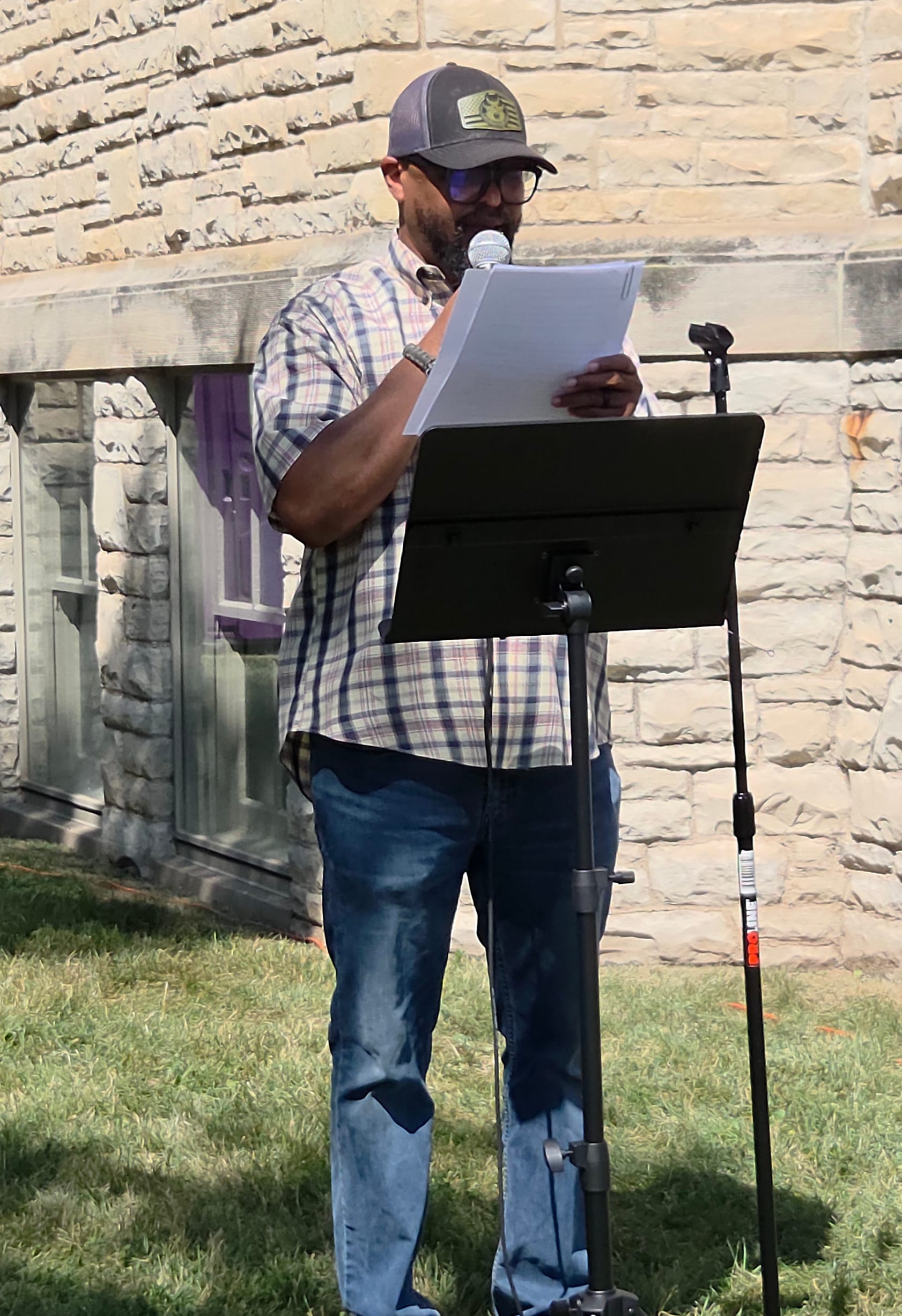
Ann Muenster reads from an Elizabeth Cady Stanton speech delivered at the Seneca Falls Convention, which marked the beginning of the women's suffrage movement.
'Is this America ...?'
Local activist Ann Muenster read from a speech from leading women’s rights advocate Elizabeth Cady Stanton, an organizer of the Seneca Falls Convention held on July 19, 1848. The convention was the beginning of the women’s suffrage movement. More than seven decades later, women gained the right to vote.
“Now, in view of this entire disfranchisement of one-half the people of this country, their social and religious degradation, in view of the unjust laws above mentioned, and because women do feel themselves aggrieved, oppressed, and fraudulently deprived of their most sacred rights, we insist that they have immediate admission to all the rights and privileges which belong to them as citizens of these United States,” Muenster read.
At the 1964 Democratic National Convention, Fannie Lou Hamer talked about death threats and the loss of her job when she tried to register to vote.
“Is this America, the land of the free and the home of the brave, where we have to sleep with our telephones off the hooks because our lives are being threatened daily, because we want to live as decent human beings, in America?” read Nancy Jones, another local activist. “All of this is on account of we want to … become first-class citizens?”
On August 6, 2015, the 50th Anniversary of the Voting Rights Act, Congressman John Lewis and President Barack Obama shared the stage and delivered a speech encouraging Congress to pass an updated version of the Voting Rights Act. Obama’s words, shared by Timber Smith, stressed that the work is not done and charged people to take action. “Most of all, citizens, seize the power that you have. Make this democracy work. Do not succumb to cynicism. Heroic things happen when people get involved.”
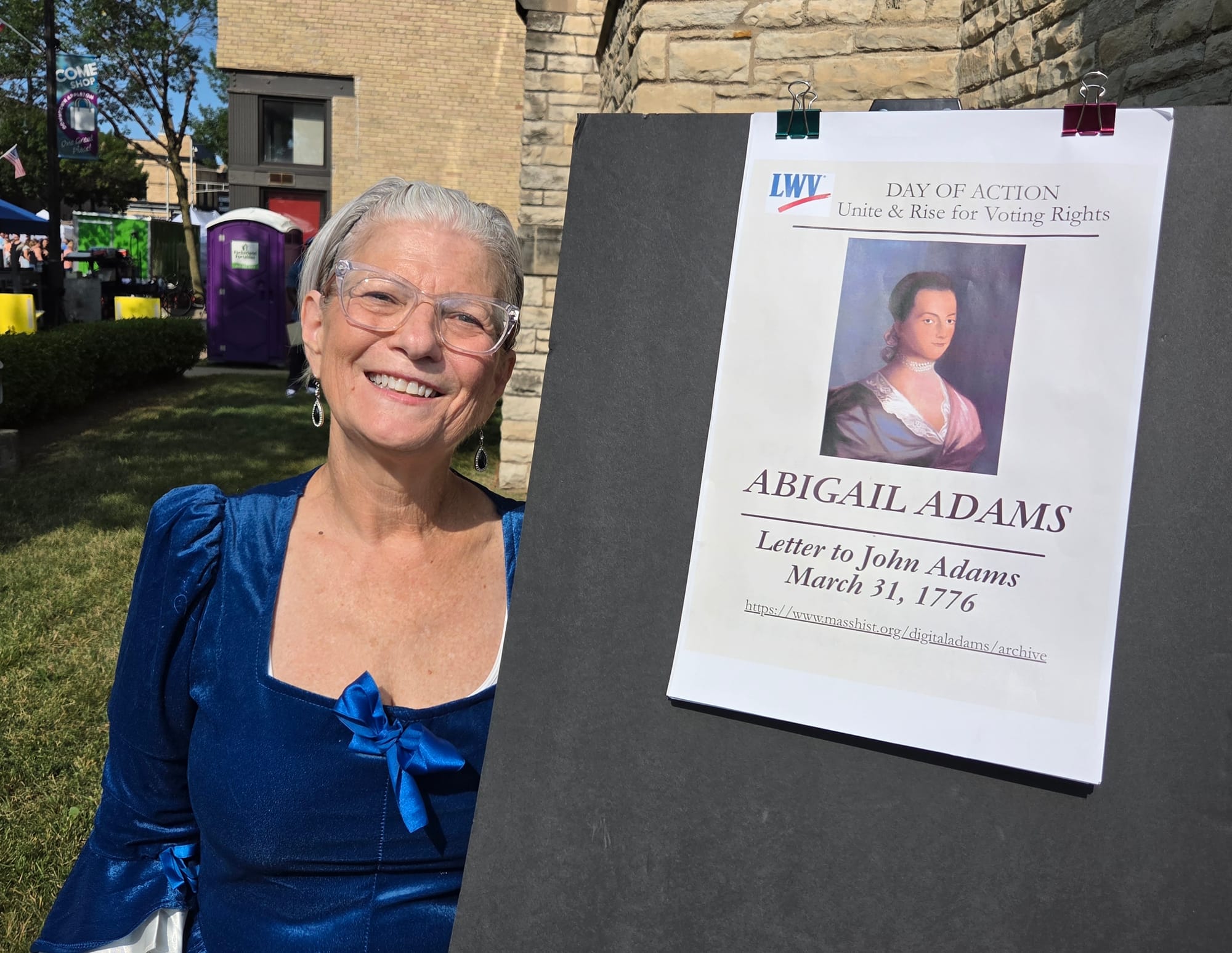
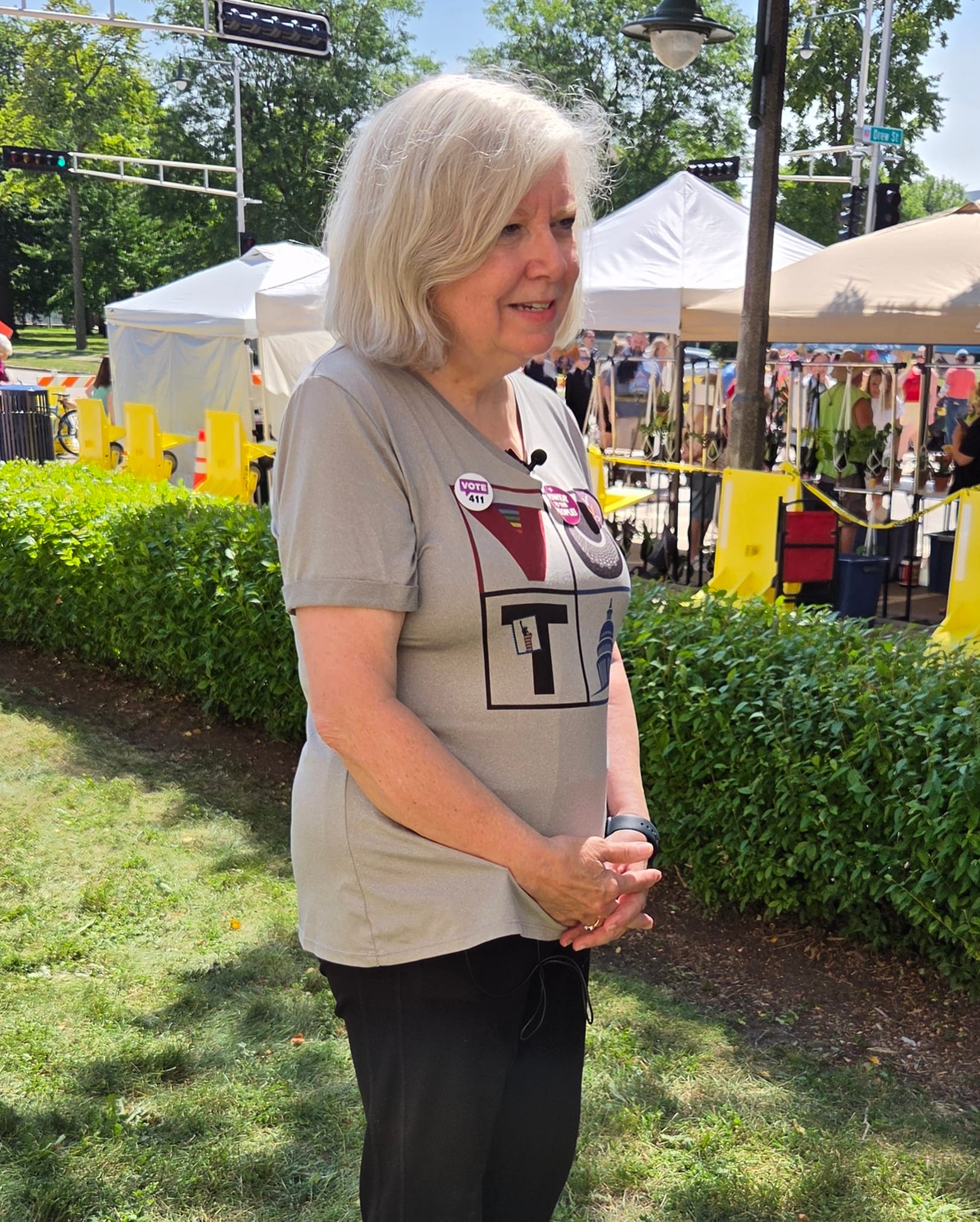
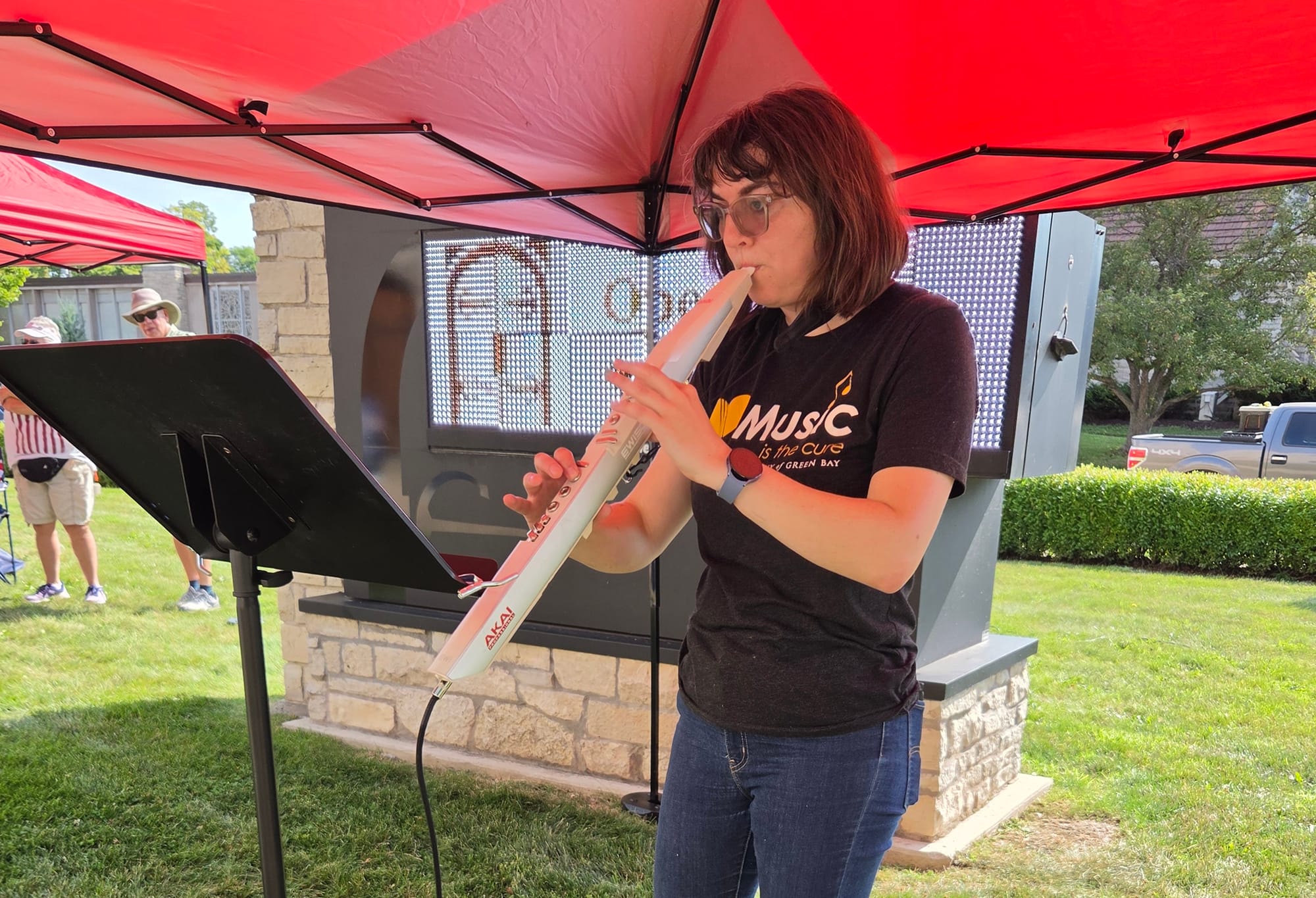
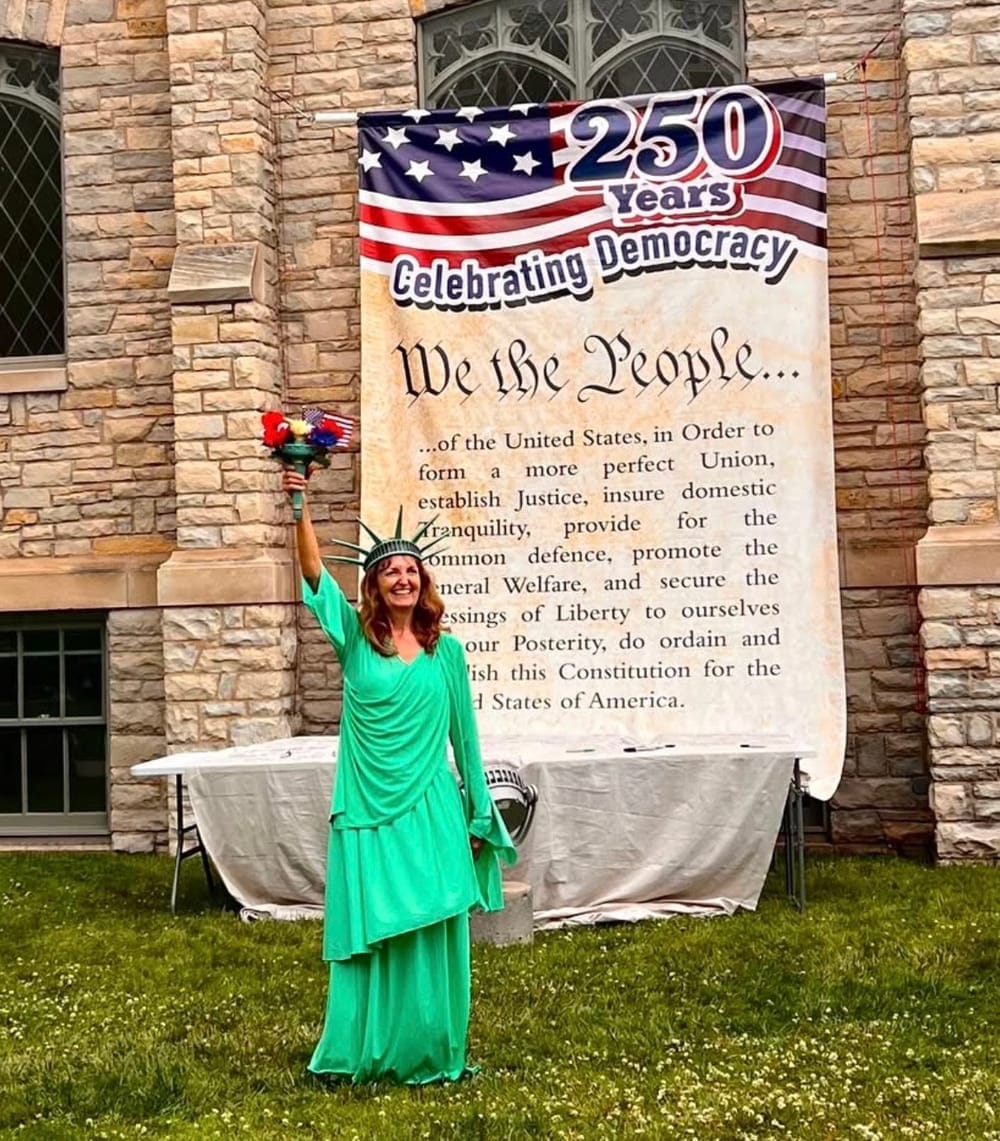
Clockwise from top left: Denise Fenton as Abigail Adams; Jan Quinlan, President of the League of Women Voters -- Appleton, Fox Cities; oboist Shannon Hawkins; Timber Smith reading from a John Lewis speech; Rosann Milius posing in front of the giant Preamble
The end of the Voting Rights Act
In 2013, the Voting Rights Act began to be eroded by the United States Supreme Court, first by ruling as unconstitutional federal oversight of certain states which had historically discriminated against Black citizens, then, earlier this year, by gutting most of the remainder of VRA’s strictures.
“The Supreme Court weakened Section 2 of the Voting Rights Act, which prohibits any voting rule or procedure that discriminates on the basis of race, color, or language minority status to the point of it being inoperable,” Quinlan said in her closing remarks. “The decision opened the door to redistricting efforts across the South, which once again disenfranchises voters.
“There is no challenge that is insurmountable. Our work towards a more perfect union continues, inspired by the legacy of those who came before us.”
Other community leaders and League members who shared readings included: Helene Iverson, Beth English, Linda Bjella, Amanda Skorr, Bryce Schneider, Faye Binsfeld, Katie Van Zeeland, Kempton Freeman, Rick Bjella, Dan Gabrielson, Sarah Long Radloff, Jeanne Roberts, and Alder Vered Meltzer, who read from Franklin D. Roosevelt’s The Four Freedoms.
Vered Meltzer as President Franklin Roosevelt
The LWV of Appleton-Fox Cities continues to host their “Constitution Square” events on Saturday mornings through August on the front lawn of the History Museum at the Castle. To learn more about the League, visit lwvappletonfoxcities.org. Visit the History Museum at the Castle website at myhistorymuseum.org


