

Menasha officer sentenced for abusing Flock as statewide reckoning continues
Morales sought a vehicle belonging to his ex-girlfriend, who reached out to the Appleton Police Department about her suspicions that she was being tracked, triggering an investigation.


by Isiah Holmes, Wisconsin Examiner
August 18, 2026
On Monday 32-year-old Menasha police officer Cristian Morales was sentenced for misusing Flock license plate reader cameras for unlawful targeted surveillance. Morales pleaded no contest in Outagamie County court and was sentenced to six months in jail, followed by three years of probation.
His sentencing comes as Wisconsin communities push back against Flock cameras and call for more transparency and control over police surveillance technologies.
Morales was working at the Menasha Police Department when, according to a criminal complaint, he conducted seven off duty searches using between 15,234 and 92,702 individual cameras across Flock’s nationwide network. The AI-powered cameras perpetually photograph vehicles and license plates passing within their view. The images are cataloged in a database that can be searched at will by law enforcement agencies with Flock contracts. Using the intelligence collected by Flock, law enforcement can study patterns of movement for targeted vehicles so they can be intercepted later on, or develop leads for ongoing investigations.
Morales sought a vehicle belonging to his ex-girlfriend, who reached out to the Appleton Police Department about her suspicions that she was being tracked, triggering an investigation. When officers confronted Morales, he said his actions were due to “desperation, and bad judgement, combined with a lack of sleep.”
On Monday in court, the victim described a “pattern” of controlling and violent behavior by Morales, and said that she continues to suffer from anxiety and an inability to get through day-to-day tasks, Milwaukee Journal Sentinel reported. “I am here because I lived through something that changed my life,” she said in court. Morales told the court that he grew up in Menasha wanted to serve the community since childhood. “I take responsibility for the decision I made,” Morales said, WBAY 2 reported. “In a moment of desperation, I made a mistake that I deeply regret, and I never would have imagined that my decision would bring me here where I am today, where I’ve affected so many people around me.”
Judge Mark Schroeder called Morales an “oathbreaker.” Schroeder said Morales abused his authority. “He sought out the privilege of trying to keep his community safe and protecting the public in the communities in which he resided,” said Schroeder. “He sought out the tools that are handed to him as a result of that oath that he took and then broke. Sought out those tools with the purposes that are designed to keep people safe, and they do. And then abused it for his own personal and nefarious purposes.”
Inconsistent accountability
Schroeder’s assertion that Flock cameras keep people safe is something communities across the state and country are now debating. Morales’ situation is also far from unique, in a system where officers face inconsistent penalties for misusing the camera network.
While Morales was initially charged with stalking, he was ultimately sentenced for felony misconduct in public office. A month after Morales was charged in Menasha, Milwaukee officer Josue Ayala was charged with misdemeanor misconduct in public office for also using Flock while on duty to track two people, including someone he had been in a romantic relationship with. The victim realized that Ayala searched her vehicle after using the haveibeenflocked website, and reported it to police. He used “investigation” as his search term to describe his use of Flock, the most common search term according to a 2025 analysis of Wisconsin law enforcement’s use of Flock. Ayala took a plea deal last month, pleading guilty to misdemeanor attempted misconduct in public office and receiving 12 months probation while avoiding jail and prison time.
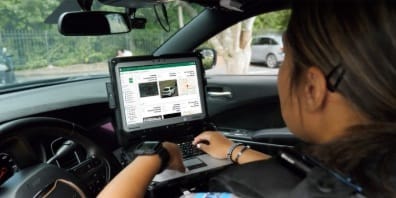
A case involving Kenosha County Deputy Frank McGrath is still in process. McGrath used Flock and a squad car tracking system called Polaris to monitor his girlfriend, who was also a Kenosha County deputy. McGrath entered “suspicious,” another common Flock search term used by officers but, like Morales, was off duty and didn’t tie case numbers to his searches. A Kenosha sheriff’s lieutenant first noticed the unusual searches and confronted McGrath. He initially attempted to mislead the supervisor, but then admitted to doing the searches. The lieutenant also talked to McGrath’s target, who said she was aware of the searches, but didn’t report them despite feeling that the activity violated policy. McGrath had been jealous of her friendship with a male coworker.
Although McGrath left the sheriff’s office, he was not charged with a crime. A John Doe petition to have a judge review probable cause to charge McGrath has been sealed, and the Kenosha County district attorney has said that he’s waiting for the conclusion of a criminal investigation into McGrath’s conduct. The Racine County Sheriff’s Office said in March that it is conducting the investigation. TMJ4 reported in July that at least five police officers in Racine County have been investigated for Flock misuse, none of whom had been criminally charged.
In both Morales’ and Ayala’s cases, prior conduct had raised concerns. Morales left the Outagamie County Sheriff’s Office in 2024, according to the Badger Project. His supervisors noted that he nearly caused a car accident during a traffic stop, and had other problems. Morales was allowed to resign rather than be terminated, and was hired by the Menasha Police Department eight months later. Ayala had undergone previous internal investigations both in Milwaukee and when he worked at the Glendale Police Department.
In early July, another Milwaukee officer was charged with misusing Flock. This time it was an internal affairs detective, Tehrangi Chapman, who was charged with felony misconduct in public office and misdemeanor misuse of a GPS device. Chapman had used Flock to monitor someone he’d been watching since 2019, even before Milwaukee first signed its contract with Flock in 2022. Chapman had been involved in investigating Ayala’s misuse of Flock before his own misuse of the system had been discovered.
Community members fighting back
While the courts work out whether or how to hold officers accountable for abusing Flock, communities are also demanding accountability from local officials. Several areas including Kaukauna, Sturgeon Bay, Verona, Appleton, Oshkosh, and Dane County have all canceled their contracts with Flock.
The reasons vary, from growing concerns that the cameras could be accessed by federal agencies including ICE, to the growing list of officers who have used the cameras for personal vendettas. In Verona, residents and local officials said that while they trust their local police department, they don’t trust Flock Safety — the multi-billion dollar company behind the cameras — or the federal government. Even President Donald Trump recently said that with the cameras “you have pros and cons” and that “it’s being studied right now, we’ll have an answer soon as to our views on it.”
The police chief of Oshkosh pushed to cancel the city’s contract after finding out that a company representative had misled city officials when asked whether Flock could generate heat maps depicting a vehicle’s movement patterns. As it turned out, the cameras are fully capable of doing that. Over 50 agencies statewide have canceled their Flock contracts, according to the grassroots group Deflock.
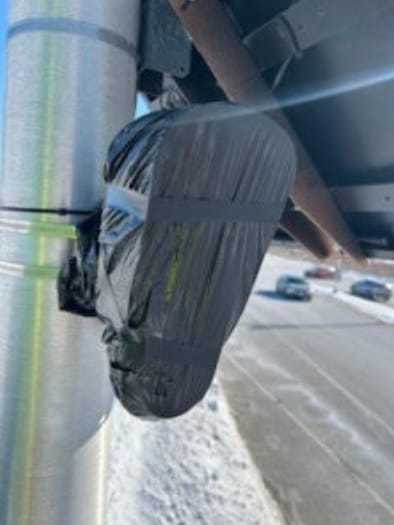
Not all police departments have chosen to give up Flock. The Milwaukee Police Department has repeatedly said that the cameras have been useful in solving violent crimes and locating missing people. The Green Bay police chief credited Flock with helping his department to become proactive in combatting a rise in violent crime. But he also acknowledged that privacy needs to be respected at all times. Auditing procedures have been stepped up in Milwaukee. Green Bay limited which agencies can access its Flock network, and conducted its own audit of potential misuse. Meanwhile, Flock Safety has developed new tools to boost auditing and limit the ability for officers to conduct searches using vague terms and without case numbers.
Meanwhile controversy and cancellations continue. Recently, a woman was pulled over by Brookfield officers at gunpoint because her vehicle had been mistakenly entered into the Flock system as being connected to a homicide investigation. The Milwaukee Police Department blamed personnel for not removing the car from the system rather than Flock itself, and the Brookfield police chief defended the actions of his officers.
In late July, Stoughton’s common council voted to discontinue its Flock contract amid growing concerns from residents. Among the issues citizens raised was that one of the cameras was pointed directly at the Cascade Falls apartment complex, which offers affordable housing in the area. One man told the council members that “I wouldn’t want a camera in my face all the time, so why would I want other people to live like that?” A woman named Carrie called the cameras “ominous and unwelcoming” and said, “being surveilled by your government says a lot about what your government thinks about you.” Another man questioned why a vote was needed to remove the cameras when they were installed without a vote or public input.
Amanda Merkwae, policy and advocacy director for the American Civil Liberties Union of Wisconsin, says the lack of public input or even notice of the purchase of surveillance technologies is due to sole source no-bid contracts. These kinds of contracts bypass the public procurement process.
“There’s no public notice, let alone clear information about if there’s even approval that happened at the common council or common council committee when they’re doing these no-bid contracts,” Merkwae told the Examiner. Companies win sole source, no-bid contracts by arguing either that only they can provide the service the police want, or that their technology is proprietary.
“You have a police department that is maybe being advertised some product,” Merkwae said. “You have this multibillion-dollar company that’s sole goal is to increase value for their shareholders. They don’t have, like, the police department’s best interest as their driving force. They don’t have the interest of the public as their driving force. They’re trying to make money. And so, they have a huge incentive to use no-bid contracts.”
As Flock comes under more scrutiny, other companies are moving to fill the gap. Axon, which produces body cameras and other technologies for police departments, is pushing license plate readers to cities that are ditching Flock. Merkwae said Axon has other products like Fusus, a real-time crime-center platform used by the Milwaukee Police Department, that integrates private surveillance cameras, license plate readers, body cameras, and other feeds into a single interface.
“I think that it is ludicrous to just trade one for-profit Big Brother for another for-profit Big Brother that is, like, trying to make money,” said Merkwae. “That’s their goal.” She added that local officials need to ask tough questions of both the police and surveillance companies about how the technologies work, how they can be exploited, and how citizens can be protected. She said that “a bunch of this has flown under the radar with quietly signed no-bid contracts.”
In some parts of the country, local governments have passed ordinances like Community Control Over Police Surveillance (CCOPS), which provides a framework so that the public has a say in whether communities adopt surveillance technologies. Under CCOPS, the community is given notice whenever a police department either wants to acquire a new surveillance system or renew a contract for an existing one. It provides local residents the opportunity to ask questions about how the technology works, how much it costs, and other details, while also providing an opportunity to contest its adoption.
Even these ordinances have their limits. “CCOPS is a helpful baseline but also want to recognize that in the 10 years since CCOPS laws have been on the books, the scope and power of AI-powered warrantless dragnet surveillance tech has just expanded so much,” Merkwae said. “And the way that tech aggregates data and then integrates all these systems together, it’s like a new frontier in terms of how government entities can protect their data and protect their residents. So I think that CCOPS ordinances should be — or models like that — should be the baseline. But at this point in time, when these tools are so profoundly powerful, I think that it should be up to the local residents in a community, like, what is the line? How stringent do you want these requirements on the front end to be before allowing one of these for-profit companies to come into their jurisdiction and surveil people?”
Wisconsin Examiner is part of States Newsroom, a nonprofit news network supported by grants and a coalition of donors as a 501c(3) public charity. Wisconsin Examiner maintains editorial independence. Contact Editor Ruth Conniff for questions: info@wisconsinexaminer.com.


